Successfully landing a remote software developer position involves understanding where these jobs to use are posted, how job search tools effectively, and what skills companies are actively seeking. RemoteAnywhereJob provides daily updated listings, advanced filtering by skills and location, and email subscription services that notify you when relevant positions become available. This guide walks you through practical strategies to find and secure remote software developer jobs that match your expertise and career goals.
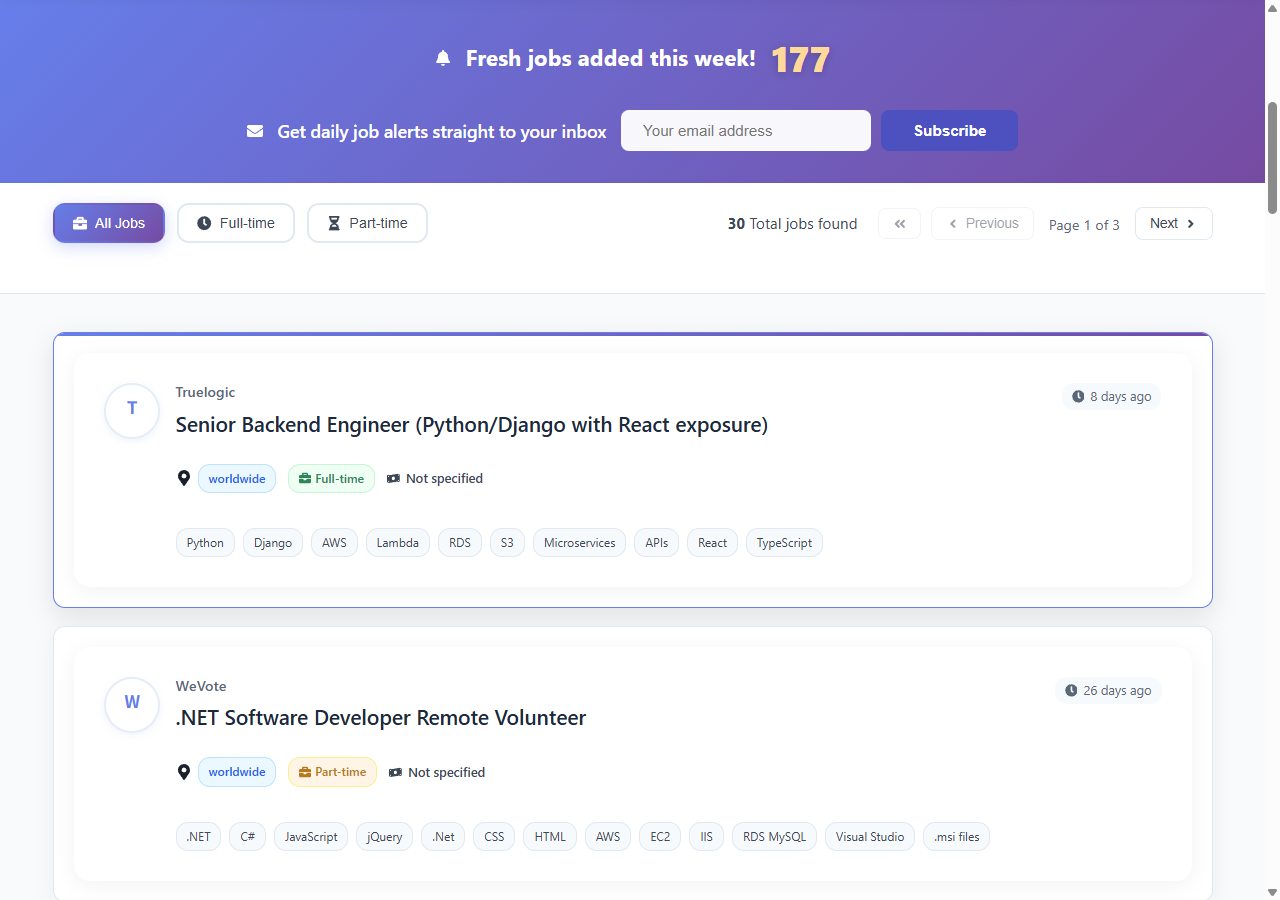
RemoteAnywhereJob platform - Search thousands of remote software developer jobs worldwide
Understanding the Remote Software Developer Job Market in 2026
The remote software developer job market has matured considerably over the past several years. Companies worldwide have moved beyond experimental remote arrangements to fully embracing distributed teams as their default operating model. RemoteAnywhereJob aggregates positions from verified employers, ensuring that job seekers can access legitimate opportunities rather than sifting through scams or outdated listings. This platform supports 11 languages, making it accessible to developers regardless of their geographic location or linguistic background.
Several factors distinguish finding remote software developer jobs today from previous years. Companies posting on RemoteAnywhereJob have undergone verification processes, giving candidates confidence in the legitimacy of listed positions. Salary transparency has improved significantly, with many employers sharing compensation ranges directly in job descriptions. The platform's advanced filtering system allows developers to narrow searches by programming language, experience level, and preferred time zones, streamlining the job discovery process considerably.
Industry Demand and Specialization Trends
Certain specializations continue to command higher demand and better compensation packages in the remote job market. Artificial intelligence and machine learning stand out as the most sought-after skills, with companies actively recruiting developers who can build, deploy, and maintain AI-powered systems. On RemoteAnywhereJob, you can filter specifically for these high-demand roles using keywords like Python, TensorFlow, or machine learning to find relevant openings. Full-stack development remains consistently popular, as companies prefer developers who can work across the entire technology stack.
The programming languages and frameworks that employers prioritize have also evolved. JavaScript and TypeScript continue to dominate web development positions, while Python has solidified its position as the language of choice for data science and AI applications. RemoteAnywhereJob's daily job updates ensure you never miss new opportunities in your specialized field. Searching for positions using specific tech stack keywords significantly increases your chances of finding roles that match your expertise.
Compensation Structures on Remote Job Platforms
Remote software developer jobs on platforms like RemoteAnywhereJob offer various compensation structures reflecting the global nature of distributed talent. Some employers provide global pay scales offering uniform compensation regardless of employee location, which benefits developers in higher-cost areas. Others implement location-adjusted salaries that factor in local cost-of-living standards. RemoteAnywhereJob displays salary information when provided by employers, helping you evaluate opportunities before investing time in applications.
Researching compensation before applying helps developers set realistic expectations and negotiate effectively. The platform's job alerts feature allows you to monitor salary trends in your specialization over time. According to recent data from RemoteAnywhereJob listings, experienced remote developers in high-demand specializations can command six-figure salaries, while entry-level positions typically range from fifty to seventy thousand dollars annually depending on skills and employer location policies.
How to Find Genuine Remote Software Developer Jobs Effectively
Finding legitimate remote software developer jobs requires knowing which platforms consistently deliver quality opportunities versus those flooded with low-quality listings. RemoteAnywhereJob implements rigorous employer verification processes, ensuring that every posting comes from a genuine company with active hiring needs. This screening eliminates scams and misleading listings that plague lesser-known job boards, making your job search significantly more efficient.
The platform's powerful filtering system helps you discover remote software developer jobs that align precisely with your skills and preferences. You can filter by job type (full-time or part-time), required skills, experience level, and geographic preferences. The subscription feature enables you to receive daily or weekly email notifications when new positions matching your criteria are posted, ensuring you never miss relevant opportunities.
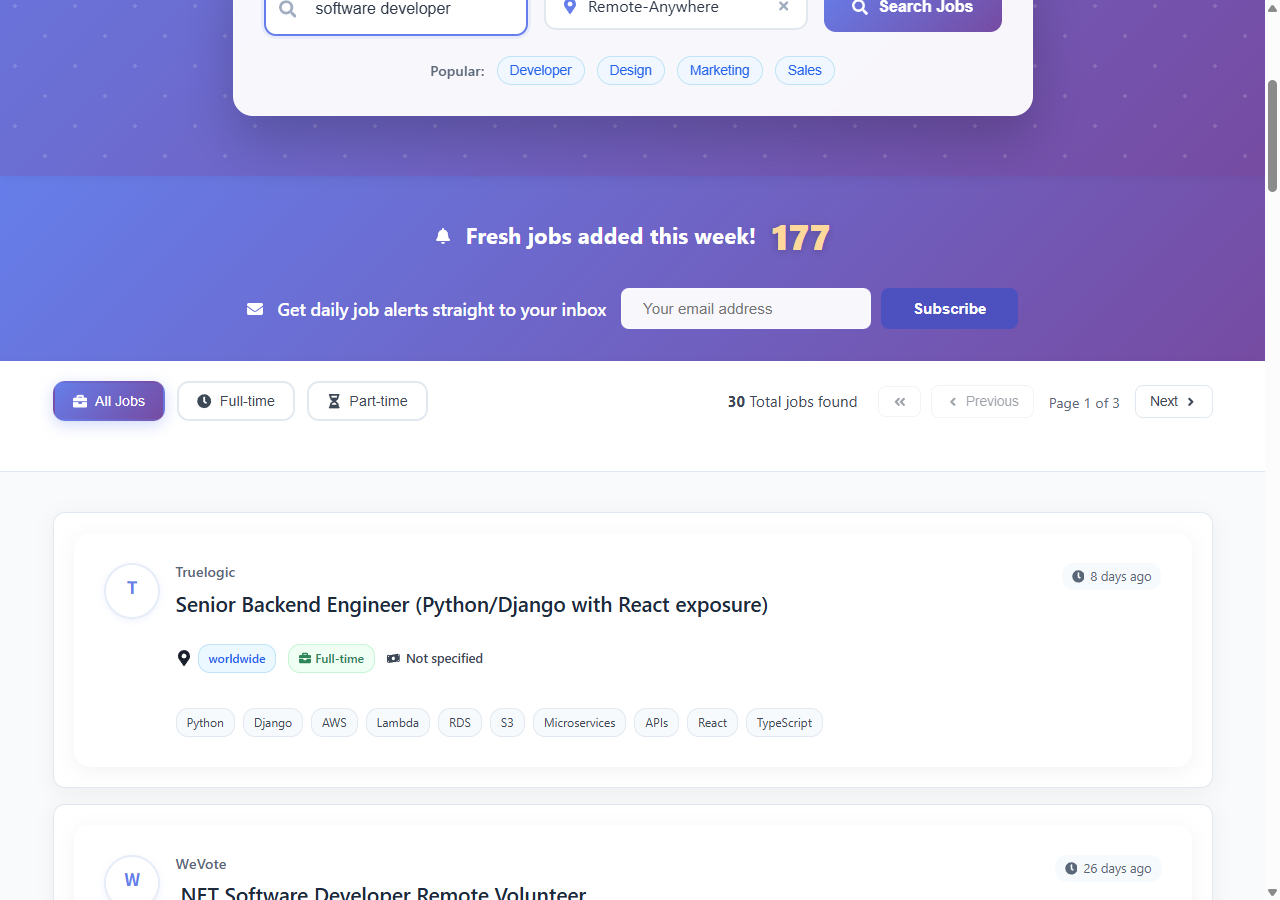
Search and filter remote software developer jobs by keywords, location, and job type
Using Advanced Search Features Strategically
RemoteAnywhereJob's search functionality allows you to find remote software developer jobs by entering specific keywords related to your expertise. Whether you specialize in React, Django, AWS, or any other technology stack, targeted keyword searches surface the most relevant positions immediately. The platform's recommendations improve as you use it more frequently, learning your preferences and suggesting increasingly relevant opportunities over time.
Setting up multiple keyword alerts maximizes your exposure to available positions. Create alerts for variations of your target roles, such as "software developer," "programmer," and "engineer," combined with your technical specializations. RemoteAnywhereJob delivers these notifications directly to your inbox, allowing you to review new openings within hours of posting. This proactive approach gives you a significant advantage over developers who rely solely on manual job searching.
Building Applications Around Platform Features
When applying to remote software developer jobs found on RemoteAnywhereJob, tailor your materials to highlight the specific requirements mentioned in each listing. The platform's job descriptions typically include detailed requirements, preferred qualifications, and information about team structure. Use these details to customize your resume and cover letter, demonstrating exactly how your experience aligns with the employer's needs.
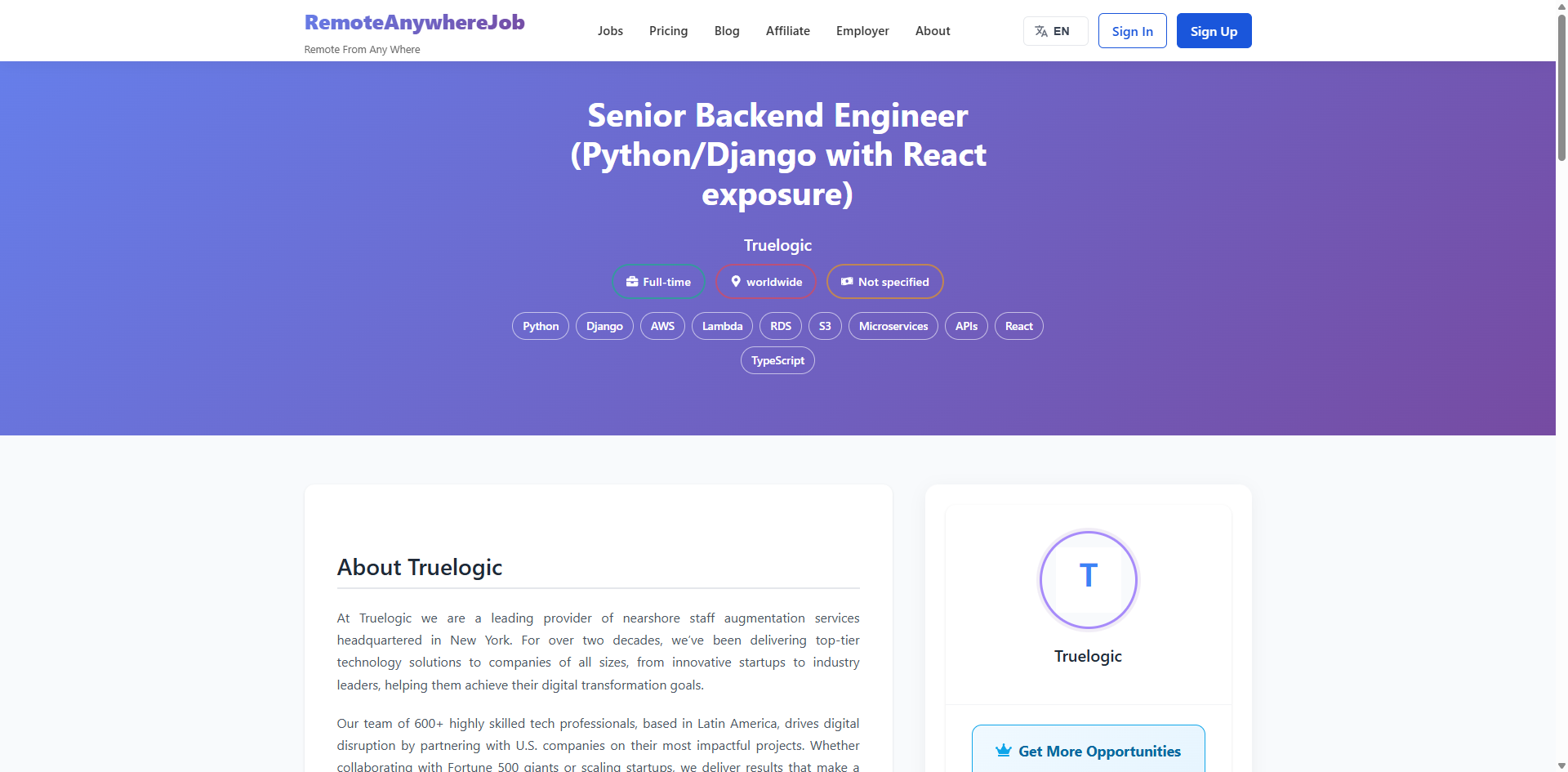
Detailed job description for remote software developer positions with skills requirements and responsibilities
RemoteAnywhereJob also offers valuable resources for interview preparation, including tips on technical assessments and behavioral questions commonly asked by remote employers. The platform's blog section provides additional guidance on succeeding in remote work environments, building portfolios that attract employer attention, and negotiating compensation effectively. Leveraging these resources throughout your job search significantly improves your chances of landing desirable positions.
Building a Compelling Remote Developer Profile
Securing remote software developer jobs depends heavily on how effectively you present your skills and experience to potential employers. Unlike traditional job applications where interviews provide opportunities to explain qualifications, RemoteAnywhereJob profiles must convey capability through clear, well-organized information about your technical background. The platform encourages developers to include detailed skill listings, experience descriptions, and portfolio links that help employers assess candidates efficiently.
A compelling RemoteAnywhereJob profile addresses the specific concerns that hiring managers have about remote workers. These concerns typically include communication skills, self-discipline, ability to work independently, and track record of delivering results without direct supervision. Your profile should proactively demonstrate these qualities rather than leaving them to be assumed or discovered during interviews. Including specific examples of remote work experience, open source contributions, or self-directed projects strengthens your profile considerably.
Creating an Impactful Portfolio
Portfolios for remote software developer jobs should showcase practical development experience through completed projects that demonstrate technical competence. Each project in your portfolio should tell a story about the problems you solved, the technologies you employed, and the outcomes you achieved. Hosting live versions of your projects allows hiring managers to experience your work directly, while well-documented source code demonstrates your technical thinking and code quality standards.
RemoteAnywhereJob allows you to include portfolio links and GitHub profiles in your applications, providing space to showcase your best work. Open source contributions provide particularly valuable portfolio content because they demonstrate collaboration skills and expose your work to public scrutiny. Maintaining an active GitHub profile with consistent contribution history signals dedication to continuous skill development and passion for software development beyond professional requirements.
Optimizing Your Presence for Remote Opportunities
RemoteAnywhereJob's platform is specifically designed for remote work, which means your profile reaches employers actively seeking distributed talent. The platform's global reach connects you with companies across 70+ countries and regions, expanding your potential employer pool exponentially. Completing your profile thoroughly, including all relevant technical skills and experience levels, increases your visibility to recruiters searching for candidates with your background.
Engagement with RemoteAnywhereJob's features, such as saved searches, job alerts, and application tracking, demonstrates active interest in remote positions. The platform's subscription options range from free access with limited features to premium plans offering unlimited applications and priority notifications. Choosing the subscription level that matches your job search intensity ensures you maximize the platform's value during your search for remote software developer jobs.
Acing the Remote Developer Interview Process
The interview process for remote software developer jobs typically includes multiple stages designed to evaluate technical ability, communication skills, and remote work readiness. Understanding what to expect and preparing accordingly significantly improves your chances of success. Most companies have refined their remote interviewing techniques over the past several years, creating more standardized but still challenging evaluation processes that test both technical competency and remote collaboration capabilities.
Technical interviews for remote positions often include live coding exercises, system design discussions, and practical assignments that mirror real-world scenarios. These assessments evaluate not just your technical knowledge but also your ability to communicate your thinking process, accept feedback, and collaborate effectively. The remote context adds additional emphasis on written communication skills and your approach to asynchronous collaboration, which RemoteAnywhereJob's resources can help you prepare for.
Technical Assessment Preparation
Practical coding challenges form the core of most remote developer interviews. Platforms like CoderPad and HackerRank provide collaborative environments where you solve problems in real-time while explaining your approach. Preparing for these assessments involves practicing coding problems regularly, focusing on clear communication of your problem-solving process as much as arriving at correct solutions. RemoteAnywhereJob's blog offers specific guidance on preparing for common interview formats used by remote employers.
System design discussions evaluate your ability to architect complex software solutions, a critical skill for senior and lead developer roles. These conversations typically involve designing scalable systems, discussing trade-offs between different approaches, and addressing real-world constraints like latency, reliability, and cost. The platform's resources include examples of system design questions and recommended preparation strategies that help developers succeed in these challenging interviews.
Remote Work Readiness and Cultural Fit
Behavioral interviews for remote software developer jobs explore your past experiences, work habits, and approach to remote collaboration. Employers want evidence that you can work independently, communicate effectively without face-to-face interaction, and maintain productivity in a home environment. Preparing specific examples that demonstrate these qualities helps you provide compelling responses to behavioral questions. RemoteAnywhereJob's content on remote work best practices provides valuable talking points for these discussions.
Culture fit assessments evaluate whether your working style and values align with the organization's approach to remote work. RemoteAnywhereJob helps you research company cultures by featuring information about each employer's remote work policies, communication expectations, and team collaboration patterns. Understanding these details before interviews allows you to assess fit and tailor your responses to demonstrate alignment with their values and work practices.
Negotiating Offers and Starting Your Remote Career
Receiving an offer for a remote software developer job marks the beginning of a new phase in the hiring process. Effective negotiation can significantly impact your compensation, benefits, and overall job satisfaction. Many candidates leave money on the table by accepting initial offers without attempting to negotiate, missing opportunities to improve their employment terms. RemoteAnywhereJob's transparency around salary ranges gives you valuable data for supporting your negotiation requests.
Successful negotiation for remote software developer jobs requires preparation, confidence, and a collaborative approach. Understanding your market value based on similar listings on RemoteAnywhereJob, knowing what you want beyond salary, and presenting your case professionally creates the foundation for productive negotiations. Most employers expect some negotiation and have built flexibility into their initial offers specifically for this purpose.
Compensation and Benefits Negotiation
When negotiating compensation for remote software developer jobs, consider the full picture of what the role offers beyond base salary. RemoteAnywhereJob displays benefits information when provided by employers, helping you evaluate total compensation packages. Home office stipends, internet reimbursements, equipment allowances, and flexible working arrangements add meaningful value to compensation packages. Equity compensation, professional development budgets, and paid time off policies also contribute to overall value and are often negotiable.
Present your negotiation case focusing on the value you bring to the role and how your skills address the company's specific needs. Research comparable salaries for similar roles using RemoteAnywhereJob's salary data to establish realistic expectations. Approach negotiations as collaborative problem-solving rather than adversarial bargaining, which tends to produce better outcomes for both parties and sets a positive tone for your future working relationship.
Setting Up for Remote Work Success
Starting a new remote software developer job requires deliberate attention to setting up your workspace, establishing productive routines, and building relationships with your new team. RemoteAnywhereJob's resources on remote work best practices provide valuable guidance for new remote employees. Taking time before your start date to prepare your home environment, test your technology setup, and learn about your employer's remote work practices sets you up for success from day one.
Building relationships with colleagues in your first weeks helps establish the connections that make remote collaboration effective. Reaching out to team members, participating actively in meetings, and documenting your onboarding experiences demonstrates initiative and accelerates your integration into the team. These early investments pay dividends throughout your remote career by creating the foundation for productive collaboration and professional growth.
Finding legitimate remote software developer jobs in 2026 requires patience, strategy, and access to quality opportunities. RemoteAnywhereJob serves as a comprehensive resource for developers seeking remote positions, offering verified job listings, advanced search tools, and valuable career guidance. By understanding how to use the platform effectively, building a compelling profile, and preparing thoroughly for interviews, you position yourself to secure rewarding positions that offer flexibility, growth opportunities, and the freedom to work from anywhere in the world.